COME HOME TO YOURSELF
Trauma-informed therapy and experiential services for people who’ve learned to survive by disconnecting—and are ready to reclaim themselves
Your body feels tense, disconnected, depleted, or unsafe
You second-guess yourself and overextend yourself
You’re not really sure of when or how to say no to people
You wish someone knew how you truly felt, but vulnerability does not feel like an option
You suspect “better” is possible, maybe you even know what to do, but you can’t seem to get there
You wonder why you still feel so bad when you’re trying so hard to do everything right
Trying harder isn’t working
You…
Your body is not the enemy. It’s the messenger.
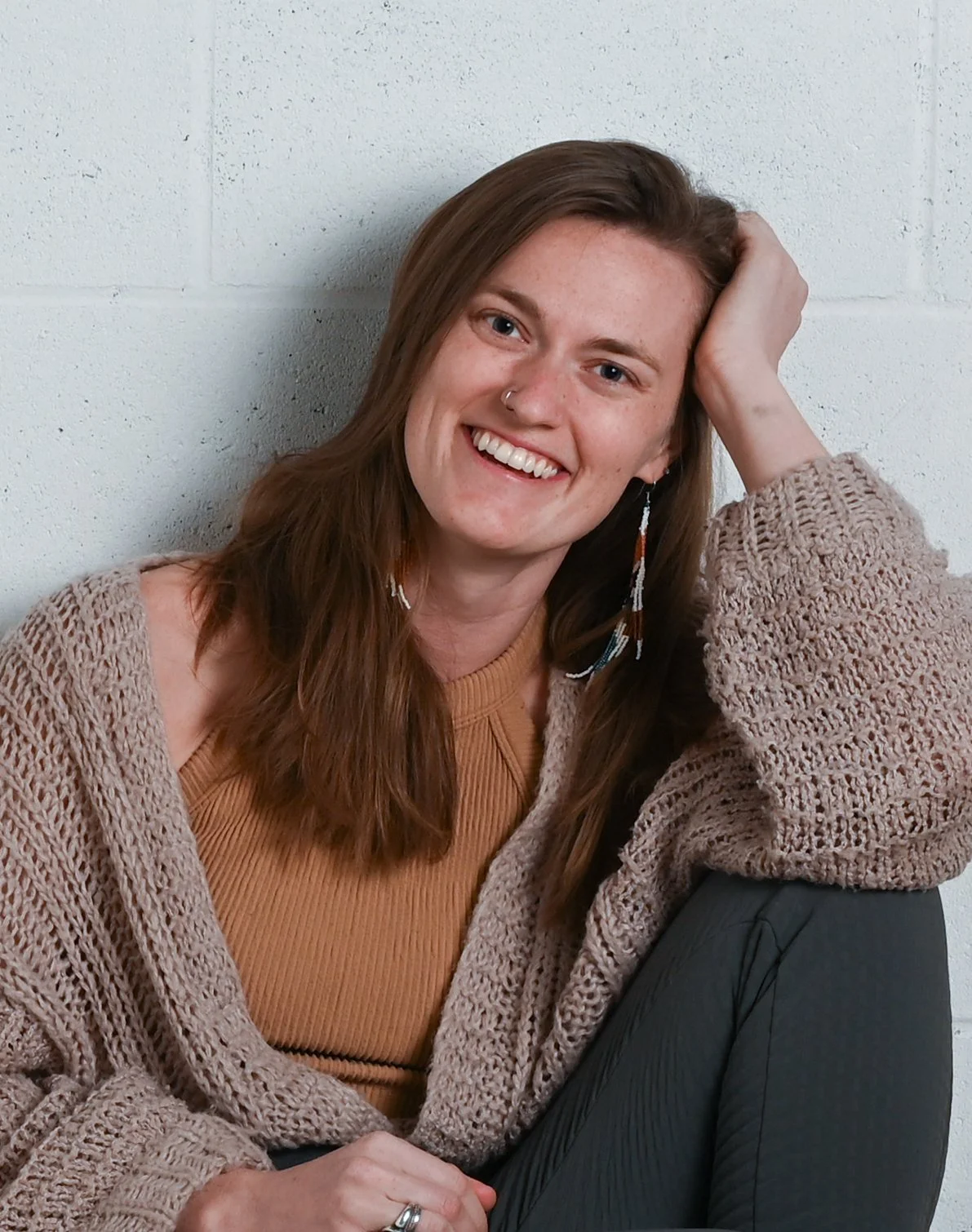
Angie Hanson, MA, LPCA
I’m Angie Hanson—a clinical mental health therapist trained in trauma-informed, embodied, and experiential approaches.
I help people figure out how and where to feel safe. Your system can only rest and repair when it doesn’t feel threatened. It’s incredible what can happen when it feels safe enough finally explore, understand, and shift.
“Experience is the best teacher.” I have had formal clinical training, but my lived experience of learning to listen to my body instead of overriding it drives my passion for this work. The wildest thing people will tell you about transformation is that self acceptance and compassion are key to inner healing—not pressure, not fixing, not forcing insight before the nervous system is ready.
You can expect to be supported, gently challenged, and checked in with often—because your autonomy matters.
The Plan
-
Don’t assume a therapist is safe just because they SHOULD be. Saftey is something built and earned when you take vulnerability risks and it goes well. You put me on the hot seat. When building trust with someone, reflect and ask yourself: Do they seem kind? Do they care about my best interest? Do they believe me? Do I feel understood? Does it seem like they know what they’re talking about?
-
Listen to your nervous system as a compass, not a problem. “What gets in the way IS the way.” If something comes up (eg. tears, a pit in your stomach, laughing) and keeps us from diving headfirst into something like you may want to, there is likely a very good reason worth exploring. And it’s likely the very thing coming up and “getting in the way” in other areas and times in your life. It is worth slowing down and understanding the hang-ups.
-
This is the part where we make sense of what has happened and what is happening. We honor your experience by grasping what it was and is really like for you. We get curious about it, we feel it, we understand it.
It’s also the part where we integrate insight and experience— we need time to bring new understanding into the way we actually live. In my experience, fumbling is the only way through it. Processing leads to, “okay, that makes sense… now what?”
-
Practice new ways of being—use your voice, set a boundary, be seen. I will help you identify the next step you’re ready to take to move toward your goal. We can practice taking the next step together.
Here’s why the practice piece is so important. You need to have lived experience so you can know in your bones that you’re capable and it’s possible. This is far more effective for building confidence than trying to talk yourself into something you hope is possible.
Healing doesn’t happen all at once. It happens through “corrective experiences” that show your nervous system that something better is possible.
You don’t have to perform, explain yourself perfectly, or know where to start. I’ll guide you every step of the way.
Imagine…
Thinking about your body makes you feel love and ease rather than resentment and resistance
You know how to sense and trust your limits, so you set boundaries unapologetically
When you get thrown off balance by life, you know how to come back yourself and realign
Just try it
You don’t have to know exactly what you need or know how to get there. An appointment is not a huge commitment- it’s more like a first date. We’re not making decisions about getting married, we are exploring if we’re a good fit. How would you know if you didn’t try?
If you want to talk first, book a free 15-minute consultation.
If you’re ready to begin, you can schedule directly.
P.S. Please don’t actually date your therapist- we have actual codes of ethics and laws about that for a reason (to protect YOU)
More about some things…
-
I am someone who is oriented to beauty and meaning. I love going hiking, and I am absolutely the slowpoke who stops to say hello to flora and fauna along the way. I am regularly in awe of or amused by the world around me. I love wandering, discovering, and marveling. I keep lots of crafts and hobbies in my rotation. I see connections and patterns everywhere, I have one million ideas, and I have to wrestle with the reality that I have limitations keeping me from knowing and experiencing everything.
There are a lot of facts and timelines to describe me, but this is how it feels to be me.
-
I have a Bachelor of Science in Psychology with a minor in Linguistics from Liberty University in 2019. I graduated with my Master of Arts in Counseling in 2024 from Concordia University Irvine. I am a Licensed Professional Counseling Associate in the state of Kentucky (297663).
-
Populations:
Individuals 18+ and couples
Concerns:
People pleasing, codependency, religious trauma, high-control religion, religious deconstruction and reclamation, purity culture, body image, queer issues, chronic illness
Clinical terms:
Anxiety, depression, grief, trauma, adjustment, stress, panic attacks, dissociation, depersonalization, body dysmorphia, gender dysphoria
-
I like to help people gain clarity on their experience so they can move forward in alignment. There are a million stories you could spin about yourself, but I really trust your body and inner-voice to guide the way and tell us when we’re on the right track. I help you connect with those internal voices so we can calibrate your true experience with the story you tell yourself and the world.
-
The nitty gritty: I am formally trained in the Townsend Model and graduated with my Master of Arts in counseling from the Townsend Institute. I am certified in Ketamine Assisted Psychotherapy by Journey Clinical. I am Level 1 certified in the Gottman Method.
I draw heavily from my training and experience with the work of Dr. Diana Fosha’s Accelerated Experiential Dynamic Psychotherapy (AEDP), Dr. Peter Levine’s Somatic Experiencing (SE), Internal Family Systems by Dr. Dick Schwartz, and Dr. Hilary McBride’s work on embodiment, religious trauma, psychedelics, and the lifespan of women in Western societies, in addition to the classic and complimentary Cognitive Behavioral Therapies, Exposure Therapies, and Attachment-based approaches.
I am supported by the countless hours of receiving care and wisdom from my personal therapists, professors, mentors, teachers, friends, and family, and all those who came before us. I am inspired by you- my clients- by your willingness to confront painful or difficult things with the small hope or strong conviction that it can be better. I believe I can only take others as far as I am ready, willing, and able to go myself.
-
Traditionally, when people think of mental health therapy, it involves talking about your problems to figure them out. That is valuable! A lot of therapists advertise the somatic, embodied, or experiential services because it takes it a step further. It’s one thing to talk about your feelings, it’s quite another to feel them in real time together.
Somatic means including the body as an important part of your experience, not just the mental and emotional aspects. Embodied or embodiment means having your focus actively turned toward what’s happening in your body (eg. being aware that your belly feels hollow, your legs feel restless, your heart feels warm). Experiential means actually doing something to create the desired outcome (eg. If I want to feel confident, I might wear a certain outfit, accomplish something challenging, do something I’m good at). Combining all of those looks like honoring your body, paying attention to the way it shifts and responds to you processing or practicing something. That’s what I aim to facilitate.
-
“Trauma” is such a buzzword right now, and a lot of people advertise being “trauma-informed,” but what they mean by that can vary a lot.
Here’s what I mean. Trauma is how an event, circumstance, or relationship impacts your mind and body by reminding you of the awfulness of that thing. Usually, it felt overwhelming, and there was nowhere or no one there to allow you to safely process it the way your body needed to. When that’s the case, your system intuitively adapts by blocking out memories, dampening emotions, disconnecting, until your system senses it is ready to be tended to.
From my perspective, trauma-informed care means providing internal and external care that would allow you to safely process that so that the signs of trauma do not have to yell anymore to get your attention (the gut punch or pit in your stomach, the compulsive people-pleasing, the flashbacks, the intrusive thoughts, the nightmares, the panic attacks, the feeling out of your body, the running away).
Internal care looks like learning how to cope with, process, understand, and release intense feelings.
External care means assessing and possibly adjusting your environment to ensure you are supported (e.g., relationships, employment, nutrition, sunlight, movement).
Trauma work means decreasing the intensity of the symptoms because we have honored the origin of the pain by tending to the wound.
-
Good question. Both!
I offer this service to my friends, family, colleagues, strangers I’ll never see again… You don’t have to be my counseling client to have a deeply moving portrait experience with me. I would be giddy to help you create pictures where you look and feel like your authentic self. Especially if you hate having your pictures taken and really want to have a better experience.
I do provide this service for my counseling clients as well. In that context, this service is best understood through the lens of exposure therapy and expressive creative therapies. I maintain the role of the therapist and give attention to disrupting automatic thoughts, processing emotional responses, and challenging distorted beliefs with this educational and experiential intervention.
-
I do not accept insurance. Accepting insurance as a therapist is quite costly toward income, time, energy, and emotional capacity. For many therapists, taking insurance means seeing more clients for less pay to make ends meet. This frequently translates into lower-quality care for clients as providers must disperse their energy to meet the demands required to earn a living wage. I will not sacrifice quality for quantity.
I recognize that this business decision affects some folks' access to care.
I can provide referrals to a more affordable provider
I can provide a superbill for individual counseling. This is a form that you give to your insurance directly for reimbursement. If your insurance plan has out-of-network coverage for mental health services, then you may be entitled to reimbursement for therapy services.
You can sign up to be notified about groups, retreats, or workshops to learn from me at a more accessible price point
-
You can email, text, or leave a voicemail. I do my best to get back to folks within a couple of business days, but if you have not heard back from me in two business days- send me another message! I never ever want to drop the ball on my clients (in fact, it’s an ethical obligation for therapists to provide continued care or provide an alternative plan and not abandon their clients), but sometimes messages truly do get missed.
Angie@returnandreclaim.org or 502-625-6512
Contact Me
Ready to learn how to feel at home within yourself?